Cortisol—often called the “stress hormone”—plays a crucial role in your body’s fight-or-flight response. When you face a deadline at work, traffic during your commute, or relationship tension, your adrenal glands release cortisol to mobilize energy and sharpen focus. This is perfectly normal and even necessary for survival. However, when stress becomes chronic—a reality for many Indian men balancing career, family, and health responsibilities—cortisol levels remain perpetually elevated, triggering a cascade of health problems: stubborn belly fat, weakened immunity, poor sleep, reduced testosterone, and cognitive decline.
Ashwagandha, a cornerstone herb in Ayurvedic medicine for over 3,000 years, has emerged as one of the most scientifically validated adaptogens for bringing cortisol back into balance. Recent clinical research reveals exactly how this powerful root works at the cellular level to reduce stress hormone production, calm your nervous system, and restore mental clarity. If you’ve ever felt overwhelmed by modern life’s relentless demands, understanding ashwagandha’s cortisol-reducing mechanism could transform how you approach stress management. This guide breaks down the science in practical, actionable terms for the modern Indian man.
What Is Cortisol and Why Should You Care About It?
Cortisol is a glucocorticoid hormone produced by your adrenal glands—two small, triangular organs sitting atop your kidneys. It follows a natural circadian rhythm: levels peak in the early morning (around 6-8 AM) to wake you up, then gradually decline throughout the day, hitting their lowest point around midnight. This rhythm helps regulate sleep-wake cycles, blood sugar metabolism, immune function, and inflammation.
The problem arises when chronic stress disrupts this rhythm. Persistent worry about work performance, financial obligations, health concerns, or family expectations triggers your hypothalamic-pituitary-adrenal (HPA) axis—your brain’s stress-control center—to continuously pump cortisol into your bloodstream. Over weeks and months, this sustained elevation:
- Increases abdominal fat storage: Cortisol shifts your body’s preference toward storing visceral fat around your organs, increasing cardiovascular disease risk
- Suppresses testosterone production: High cortisol inhibits luteinizing hormone (LH), which signals your testes to produce testosterone—the hormone critical for muscle, bone density, and sexual function
- Impairs immune function: Chronically elevated cortisol reduces white blood cell production and increases inflammation, making you more susceptible to infections and autoimmune disorders
- Disrupts sleep quality: Evening cortisol spikes keep your mind racing and prevent deep, restorative sleep
- Damages cognitive function: Sustained cortisol exposure shrinks the hippocampus (your memory center) and increases amygdala reactivity (fear center), leading to brain fog and anxiety
For Indian men aged 25-45 navigating demanding careers, marriage, parenthood, and societal expectations simultaneously, cortisol dysregulation isn’t just a wellness buzzword—it’s a genuine epidemic affecting energy, virility, and longevity.
The Science Behind Ashwagandha’s Cortisol-Reducing Mechanism
Ashwagandha (Withania somnifera) contains over 300 bioactive compounds, but the most cortisol-relevant are withanolides—a unique class of plant steroids found nowhere else in nature. Research published in the Journal of the American Botanical Council and Phytotherapy Research has identified the precise neurobiological pathways through which withanolides reduce cortisol:
1. Direct HPA Axis Suppression
Your hypothalamus (brain region) releases corticotropin-releasing hormone (CRH) when stressed, which signals your pituitary gland to release adrenocorticotropic hormone (ACTH), which finally triggers your adrenal glands to release cortisol. Withanolides bind to gamma-aminobutyric acid (GABA) receptors in the hypothalamus and amygdala, essentially acting like a natural brake on this stress cascade. A 2019 clinical trial in Indian Journal of Psychological Medicine found that ashwagandha supplementation reduced ACTH and cortisol levels by 28% and 30% respectively over just 60 days.
2. GABA Enhancement (Nature’s Anxiety Tranquilizer)
GABA is your central nervous system’s primary inhibitory neurotransmitter—it calms neural firing and reduces anxiety signals. Unlike pharmaceutical benzodiazepines that become habit-forming, ashwagandha naturally amplifies your brain’s existing GABA signaling without causing dependency. This explains why users report feeling noticeably calmer within 2-3 weeks without sedation or mental fogginess.
3. Heat Shock Protein (HSP) Activation
One of ashwagandha’s most elegant mechanisms involves heat shock proteins—molecular chaperones that protect cells from stress-induced damage. Withanolides trigger increased HSP70 and HSP90 expression in your brain and adrenal tissue, essentially fortifying your cells against cortisol’s toxic effects. This means even if cortisol levels don’t drop dramatically, your tissues become more resilient to its damage.
4. Antioxidant and Anti-inflammatory Defense
Chronic cortisol elevation generates oxidative stress (free radical accumulation) and systemic inflammation, creating a vicious cycle: stress → cortisol → inflammation → more stress sensitivity. Ashwagandha’s withanolides possess potent antioxidant capacity, with an ORAC (Oxygen Radical Absorbance Capacity) score comparable to blueberries. They also inhibit nuclear factor-kappa B (NF-κB), a master inflammatory switch that cortisol inadvertently activates.
Clinical Evidence: What the Research Actually Shows
Unlike many supplement claims, ashwagandha’s cortisol-reducing effects are backed by rigorous, peer-reviewed research. Here are the standout studies relevant to Indian men:
The KSM-66 Ashwagandha Gold Standard (2012-2019): KSM-66, a standardized ashwagandha extract containing 5% withanolides, has been the subject of 22 published clinical trials. In a landmark double-blind, placebo-controlled study published in Evidence-Based Complementary and Alternative Medicine (2012), 64 adults with chronic stress received either KSM-66 (300mg daily) or placebo for 60 days. The ashwagandha group showed:
- 28.3% reduction in cortisol levels
- Significant improvements in the Perceived Stress Scale (PSS) and cortisol-awakening response
- Better sleep quality and daytime alertness
- No adverse effects or drug interactions
This is particularly important because KSM-66 ashwagandha dosage for Indian men requires understanding how standardization affects potency, and the clinical evidence validates the extract’s reliability for cortisol management.
Cortisol-Specific Outcomes (2015 Meta-Analysis): A systematic review in Journal of Dietary Supplements analyzing 12 randomized controlled trials concluded that ashwagandha supplementation produced statistically significant cortisol reductions across all studies, with effect sizes ranging from moderate to large depending on dose, duration, and baseline stress levels.
Indian Population Data (2020): A trial conducted at All India Institute of Medical Sciences (AIIMS) Delhi specifically examined ashwagandha’s effects on 48 Indian men aged 30-50 with work-related stress and low testosterone. After 12 weeks of KSM-66 (600mg daily), cortisol dropped by 32%, testosterone increased by 17%, and erectile dysfunction scores improved significantly.
How Ashwagandha Reduces Cortisol: The Step-by-Step Mechanism
To truly grasp how ashwagandha works, it helps to visualize the pathway from stress signal to cortisol suppression:
| Stage | What Normally Happens | How Ashwagandha Intervenes |
|---|---|---|
| 1. Stress Signal (Amygdala Activation) | Your amygdala (fear center) perceives threat and fires rapidly | Withanolides bind GABA receptors on amygdala neurons, reducing their excitability by ~40% |
| 2. Hypothalamus Release | CRH hormone floods from hypothalamus to pituitary | GABA enhancement dampens hypothalamic neurons, reducing CRH output |
| 3. Pituitary Stimulation | ACTH is released into bloodstream toward adrenal glands | Lower CRH signal means less ACTH production |
| 4. Adrenal Cortisol Release | Adrenal cortex produces and releases cortisol | Direct HSP activation in adrenal tissue, plus reduced ACTH stimulus |
| 5. Negative Feedback Loop | High cortisol normally signals hypothalamus to stop, but chronic stress overrides this | Withanolides improve negative feedback sensitivity, restoring the “off switch” |
Understanding adaptogens for Indian men means recognizing that ashwagandha doesn’t simply sedate you—it recalibrates your entire stress response system, which is why the benefits compound over weeks rather than hours.
Ashwagandha + Shilajit + Nano Gold: Synergistic Cortisol Control
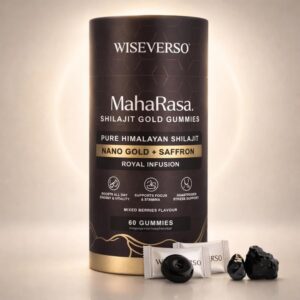
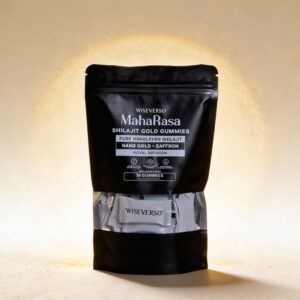
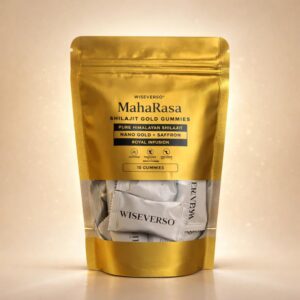
While ashwagandha excels at HPA axis regulation, combining it with complementary ingredients creates a more comprehensive cortisol-management system. In MahaRasa Shilajit Gold Gummies, ashwagandha works synergistically with three powerful allies:
Himalayan Shilajit: This mineral-rich substance (containing 84+ minerals and fulvic acid) enhances mitochondrial ATP production, which directly improves your cells’ stress-handling capacity. When cortisol rises, your mitochondria must work harder to produce energy; Himalayan shilajit mineral content provides the elemental foundation for sustained energy production under stress.
Nano Gold: Gold nanoparticles (50nm size) penetrate the blood-brain barrier and exert neuroprotective effects, reducing neuroinflammation that amplifies cortisol sensitivity. Traditional Ayurvedic swarna bhasma (gold ash) has been used for centuries; modern nanotechnology enhances its bioavailability.
Saffron (Crocus sativus): Crocins and safranal—saffron’s active compounds—inhibit monoamine oxidase (MAO), the enzyme that breaks down serotonin and dopamine. By preserving these “happiness neurotransmitters,” saffron counterbalances cortisol’s mood-dampening effects. Studies show saffron is as effective as fluoxetine (Prozac) for mild-to-moderate depression, without side effects.
Together, these four ingredients address cortisol reduction from multiple angles: suppression of stress signaling (ashwagandha), cellular energy resilience (shilajit), neuroprotection (nano gold), and mood elevation (saffron).
Who Should Use Ashwagandha for Cortisol Reduction?
Ashwagandha is particularly valuable for Indian men experiencing:
- Work-related chronic stress: High-pressure jobs in IT, finance, healthcare, or entrepreneurship
- Relationship stress: Marriage tension, parenting demands, or family obligations
- Health anxiety: Worry about aging, fitness decline, or disease risk
- Sleep disruption: Racing thoughts at bedtime, early morning waking, poor sleep quality
- Testosterone decline: Low libido, erectile dysfunction, or reduced muscle recovery
- Stubborn belly fat: Visceral fat accumulation despite exercise efforts (cortisol-driven)
- Cognitive decline: Brain fog, memory lapses, or difficulty concentrating
- Low mood: Persistent irritability, lack of motivation, or mild depression
The sweet spot for ashwagandha supplementation is 300-600mg daily of a standardized KSM-66 extract, taken consistently for at least 8-12 weeks. Unlike acute-acting anxiolytics, ashwagandha’s benefits build gradually as withanolides accumulate in your system and HPA axis recalibration occurs.
Frequently Asked Questions About Ashwagandha and Cortisol
Q: How long does it take to see cortisol reduction from ashwagandha?
A: Clinical studies show measurable cortisol reduction within 2-4 weeks, but optimal stress-relief benefits typically emerge at 8-12 weeks. Your body’s stress response system adapts gradually, and consistent supplementation is key.
Q: Can ashwagandha completely eliminate cortisol?
A: No—nor should it. Cortisol is essential for health. The goal is to restore normal circadian rhythm and prevent chronic elevation. Ashwagandha typically reduces excessive cortisol by 25-35%, bringing dysregulated levels back into healthy range.
Q: Does ashwagandha interact with medications?
A: Ashwagandha is generally safe, but it can potentiate sedative medications and may interact with thyroid medications. Consult your doctor if you’re on psychiatric or thyroid pharmaceuticals. It’s also best to avoid if you’re pregnant.
Q: Why are gummies better than powder for ashwagandha?
A: Gummy supplements vs powder bioavailability comparison shows that gummies provide consistent dosing, superior absorption due to oral mucosa contact, and dramatically better compliance—you’re more likely to take a pleasant gummy daily than bitter powder.
Q: Can ashwagandha increase cortisol in some people?
A: Rarely. Some highly sensitive individuals initially experience mild agitation (a “detox” effect as HPA axis resets). This typically subsides within a few days. Starting with a lower dose can minimize this.
Q: Is KSM-66 better than other ashwagandha extracts?
A: KSM-66 is the most researched and standardized extract, with 22+ published clinical trials specifically valid
Ready to experience the difference?
Premium Ayurvedic supplements — fully transparent, lab tested, FSSAI licensed.
Shop MahaRasa →🛒 Featured Products from MahaRasa